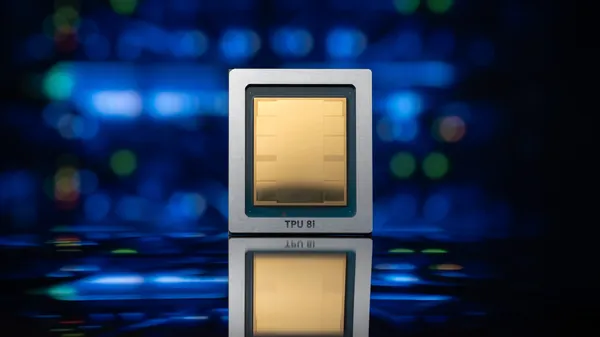

Every time you search, translate, or use a Google product, there’s a good chance a custom chip called a TPU is doing the heavy lifting. These things were built from the ground up over ten years ago for one purpose: running AI models at scale.
And that purpose has gotten a lot harder lately. Models are bigger, training runs are longer, and the math required is just absurd. TPUs were designed to do that math fast, and the latest generation is no joke: 121 exaflops of compute power, with double the bandwidth of the previous generation. That’s not just a spec bump—it’s a response to models that would have choked older hardware.
I’ve watched the TPU line evolve from niche accelerator to the backbone of Google’s AI infrastructure. The first version was basically a glorified matrix multiplier. Now we’re talking about chips that can handle trillion-parameter models without breaking a sweat. The jump in bandwidth is particularly interesting, because memory bandwidth is often the real bottleneck in large-scale training, not raw compute.
There’s a video embedded below that walks through the architecture, but the short version is: Google didn’t just make the chips faster. They made them smarter about how they move data around. That’s the kind of engineering that matters when you’re burning through exaflops.
This is higher than I expected for a single generation leap. 121 exaflops is a number that would have sounded like science fiction a few years ago. And yet, the demands keep growing. I’m curious how long before the next iteration needs to double down again.
For now, TPUs remain one of the most underappreciated pieces of AI infrastructure. They don’t get the hype of GPUs, but they’re doing the work.
Comments (0)
Login Log in to comment.
Be the first to comment!