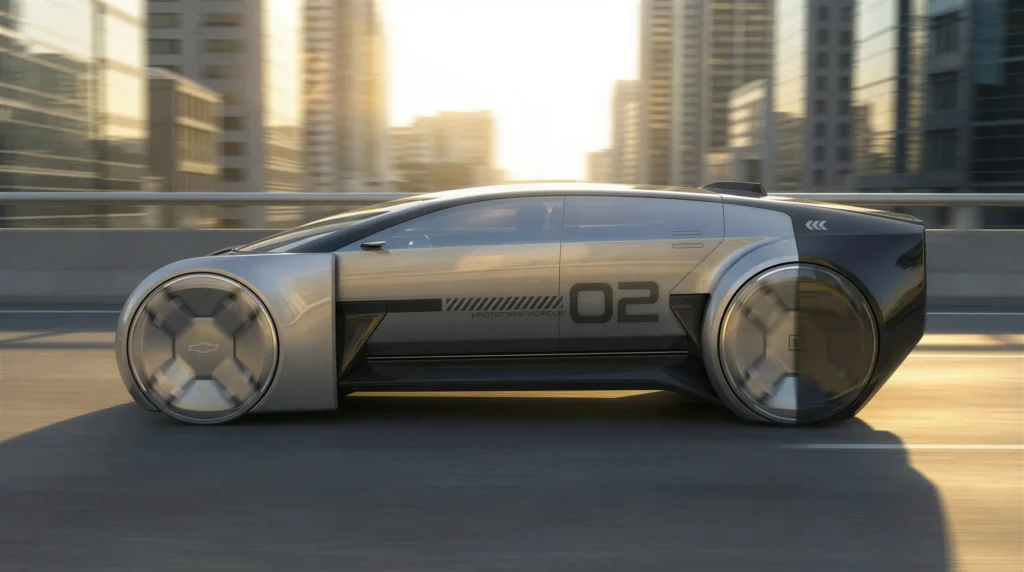

The auto design world has been swimming in fancy 3D tools and VR sculpting studios for years. But walk into any major carmaker’s design studio, and you’ll still see a human hunched over a sketchpad, refining curves by hand. That sketch gets poked and prodded from every angle, then painstakingly turned into a 3D model by a designer. Most of those digital models die on a hard drive. The survivors get carved into clay so someone can walk around them and squint at the reflections.
That’s the old way. It takes about five years from first sketch to showroom floor. The cars hitting dealerships this summer? They were first drawn in 2020 or 2021, back when the conversation about alternative fuel incentives was still about who would blink first.
Enter generative AI. Not the kind that writes your emails, but the kind that ingests thousands of existing car designs, understands the constraints of aerodynamics, crash safety, and manufacturing tolerances, and then spits out hundreds of viable shapes in minutes. A human designer picks the ones that don’t look like a melted sneaker, refines them, and feeds the result back into the loop.
That’s what’s happening now. And the first production-ready examples are starting to appear.
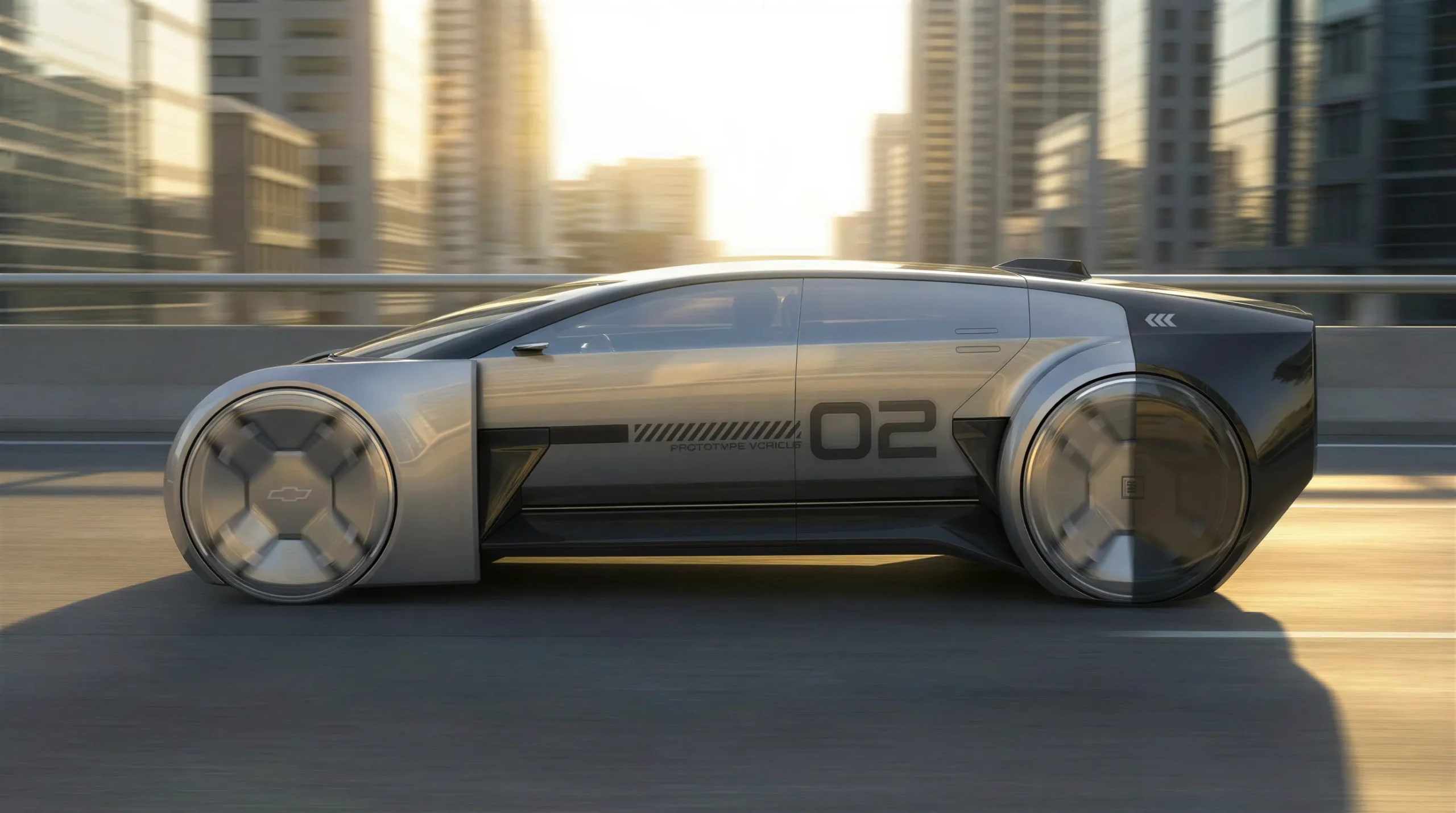
This particular image from The Verge shows a side profile that looks… plausible. It’s not a wild concept car with scissor doors and a transparent roof. It’s a normal-ish crossover shape, but the proportions are slightly off from what a human would draw. The greenhouse is a bit taller. The wheelbase is pushed further toward the corners. It looks like a car that was optimized by an algorithm that doesn’t care about “brand DNA” or “design language.” It cares about drag coefficient and interior volume.
And honestly? That’s refreshing.
I’ve been watching this space since the early days of generative design in aerospace, where it produced brackets and struts that looked like alien bones but were 30% lighter. Automotive has been slower to adopt because the stakes are higher. A plane bracket fails, a plane might crash. A car design fails, you’ve wasted a billion dollars on tooling and the car looks stupid for seven years.
But the tooling is already here. Nvidia’s Omniverse, Autodesk’s generative design modules, and a handful of startups are feeding neural networks on millions of renderings and real-world crash test data. The AI doesn’t just generate shapes. It generates shapes that pass simulation. That’s the key difference from the earlier wave of “AI design” that just produced pretty pictures.
What this means in practice: a design cycle that used to take 18 months of sketching and clay modeling can now be compressed to about four months of AI-assisted iteration. The human designer still sets the constraints and makes the final call, but the grunt work of exploring the design space is done by a machine that never gets tired and never has a bad day.
Some designers I’ve talked to hate this. They say it removes the soul from the process. Others say it’s the best thing that ever happened to them, because it frees them up to focus on the emotional, subjective parts of design that AI still can’t touch. Both are right, depending on the brand and the segment.
For a mainstream Toyota or Honda, where the goal is “inoffensive, efficient, and cheap to build,” AI design is a no-brainer. For a Ferrari or a Morgan, where the entire point is handmade eccentricity, it’s a non-starter.
The interesting middle ground is where we are now: a car that was designed with heavy AI assistance but still looks like a car. It doesn’t scream “I was made by a computer.” It just looks a bit… different. The details are a little too clean. The surfaces are a little too continuous. There’s no human inconsistency in the panel gaps.
Whether that’s good or bad depends on whether you think cars should be art or appliances. Me? I think there’s room for both. But I’m glad we’re finally past the hype phase and into the phase where actual metal is being stamped.
Comments (0)
Login Log in to comment.
Be the first to comment!