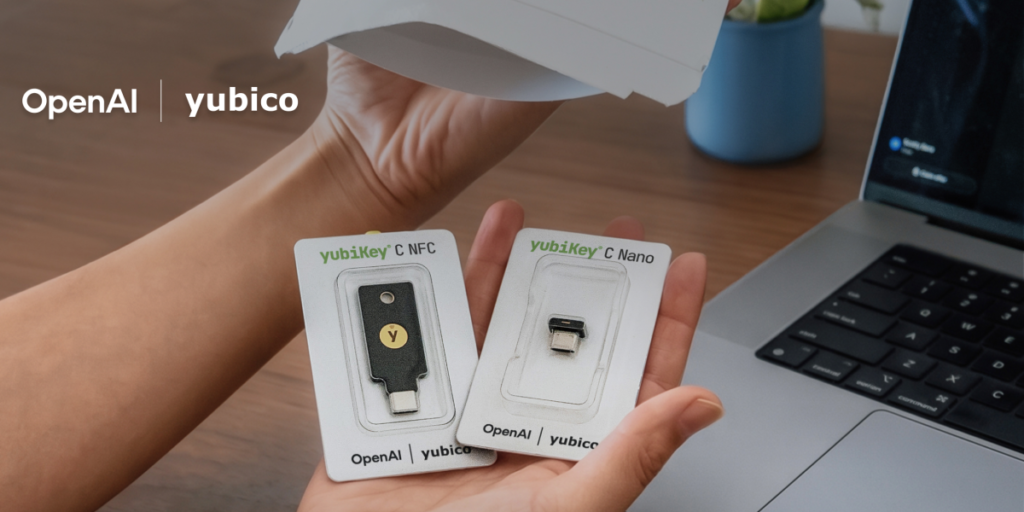

OpenAI is finally giving ChatGPT users a real reason to lock down their accounts beyond a strong password. The company announced today it’s launching additional opt-in security protections, headlined by a partnership with Yubico to support hardware security keys.
For anyone who’s been around the block with online security, this isn’t groundbreaking news — Yubico’s keys have been the gold standard for two-factor authentication for years. But for OpenAI, it’s a meaningful step. Until now, ChatGPT accounts were protected by little more than email-based authentication and standard TOTP codes, which are better than nothing but still vulnerable to phishing.
Hardware keys like YubiKeys work by requiring physical possession of the device to authenticate. Even if someone phishes your password and intercepts your SMS code, they can’t log in without the key plugged in or tapped. It’s the same level of protection that Google, GitHub, and many financial institutions have offered for a while. OpenAI is late to the party, but at least they showed up.
The integration is opt-in, meaning users will need to enable it manually in their account settings. That’s both a blessing and a curse. On one hand, it avoids forcing a potentially confusing setup on casual users who might not care. On the other, it means most people won’t bother, and the accounts that need protection the most — like those with API keys or access to sensitive data — will remain exposed unless the user takes initiative.
I’ve been using a YubiKey for my personal Google account for years, and the setup process is straightforward: register the key, assign it to your account, and then use it alongside your password during login. OpenAI’s implementation looks similar, though I haven’t tested it yet. The company says it supports both USB and NFC keys, which covers most modern YubiKey models.
What I’d really like to see next is mandatory hardware key support for enterprise ChatGPT users. If you’re running a business on top of OpenAI’s API or using ChatGPT Enterprise, you shouldn’t have the option to skip this. The risk of account compromise is too high when proprietary data is involved. For now, it’s voluntary, which feels like a missed opportunity to set a stronger default.
This move also signals that OpenAI is paying attention to the growing threat landscape around AI tools. As ChatGPT becomes more integrated into workflows — from drafting emails to generating code — the accounts become juicier targets. A compromised ChatGPT account could leak internal conversations, API keys, or even training data if misconfigured. Hardware keys don’t solve all those problems, but they raise the bar significantly.
Yubico, for its part, has been pushing into the consumer space harder in recent years. Partnering with a high-profile company like OpenAI gives them exposure to millions of users who might not have considered a security key before. It’s a win-win: Yubico gets visibility, OpenAI gets credibility.
I just wish this had come sooner. Security keys have been a standard recommendation for years, and OpenAI’s delay made their platform look careless. Better late than never, but let’s hope they don’t stop here. Next up: passkeys, biometric support, and maybe a security audit program for power users.
Comments (0)
Login Log in to comment.
Be the first to comment!