
Nuclear energy is enjoying a rare, bipartisan glow-up in the US right now. Tech companies are desperate to power their data centers, and they’re throwing money at anything that doesn’t emit carbon. That includes nuclear. But here’s the thing nobody in that boardroom wants to talk about: we still have nowhere to put the waste.
Every year, US reactors produce about 2,000 metric tons of high-level waste. That’s not a lot compared to coal ash, but it’s the kind of stuff that stays dangerous for tens of thousands of years. And right now, it’s sitting in pools and concrete casks at reactor sites—temporary solutions that were never meant to be permanent. Experts say these are safe enough for now, but “safe enough for now” isn’t a long-term strategy.
The global consensus for dealing with this stuff is a deep geological repository. Dig a hole hundreds of meters underground, put the waste in, seal it up, and forget about it for a few millennia. Sounds simple, but nobody has actually done it yet for commercial spent fuel.
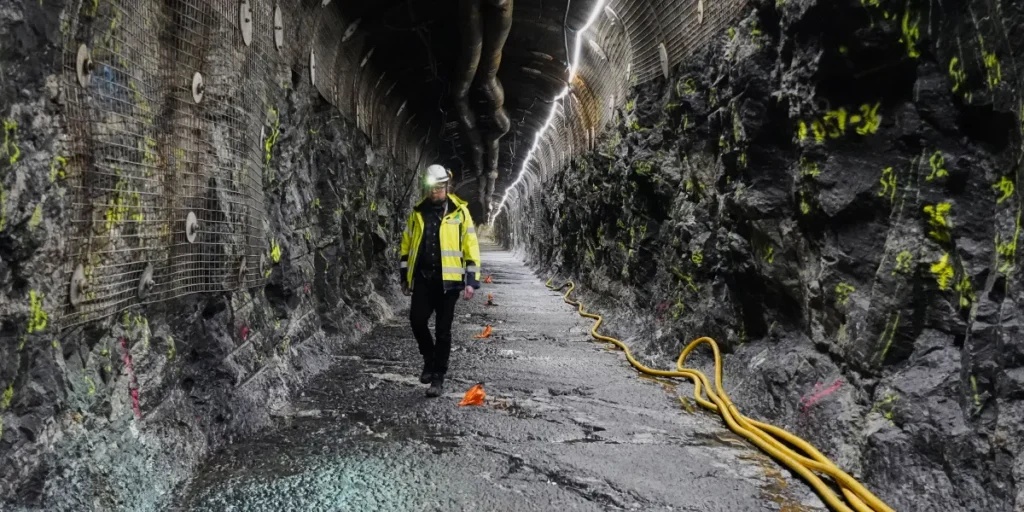
Finland is the closest. They started planning in the 1980s, picked a site in the early 2000s, and as of 2026, they’re testing their facility. Final approvals could come any day, and they might start accepting waste later this year. That’s what a functional government looks like when it comes to long-term infrastructure.
France isn’t far behind. They have the most established reprocessing program in the world—separating plutonium and uranium from spent fuel to make MOX fuel. But reprocessing isn’t a perfect loop. There are still leftovers that need a permanent home. They plan to build a repository, with pilot operations possibly starting by 2035.
And the US? We technically have a site: Yucca Mountain in Nevada. Congress designated it in 1987. But political opposition has killed it. The federal government stopped funding it in 2011, and there’s been no real activity for over a decade. Meanwhile, the waste keeps piling up.
This is especially frustrating because the US has more reactors and production capacity than any other country. We’ve been doing this for nearly 70 years. And we still don’t have a permanent solution.
Now the industry is ramping up again. China has the fastest-growing nuclear program. Bangladesh and Turkey are building their first reactors. And in the US, Big Tech is funding next-generation reactors with different coolants and fuels. That’s great, but it also means new types of waste are coming.
If these companies are serious about nuclear, they should push for progress on geological storage. The US is the richest country on the planet, and we’re hosting a lot of this next-gen reactor activity. We should be leading, not lagging.
Some experts are calling for a new organization to manage nuclear waste, separate from the Department of Energy—something like what Finland, Canada, and France have. That makes sense. The DOE has too many conflicting priorities.
Finland started planning in the 1980s. It took them four decades to get to the finish line. The best time for the US to start was decades ago. The second-best time is now. If tech companies are serious about nuclear power, they should put some of that data center money toward a real solution instead of just letting the waste sit in casks for another 70 years.
Comments (0)
Login Log in to comment.
Be the first to comment!