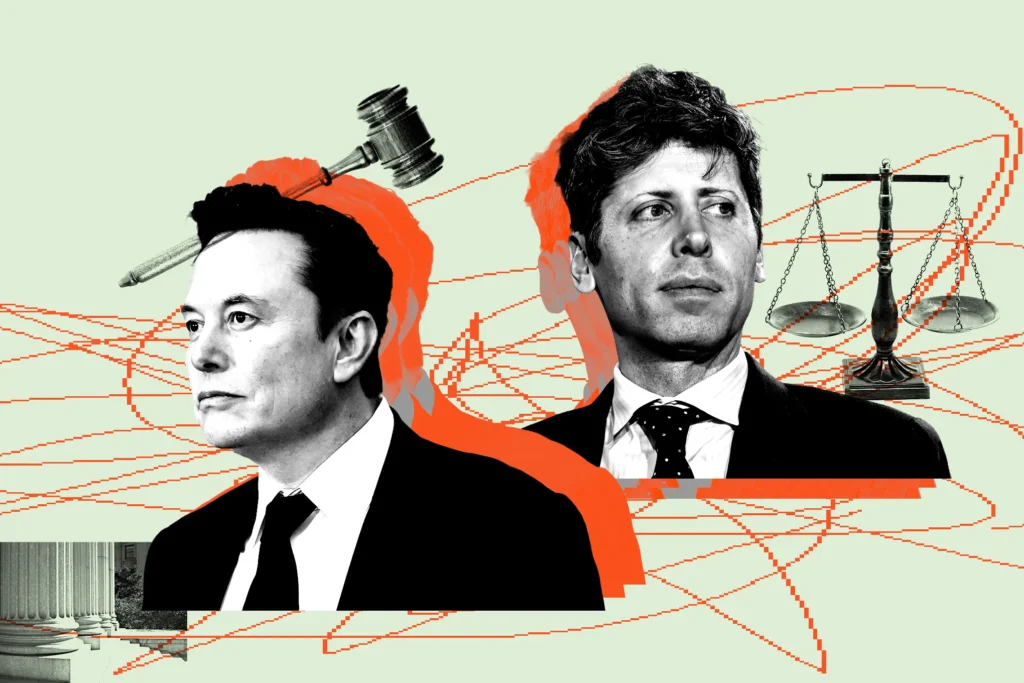

Elon Musk and Sam Altman are about to face off in a courtroom, and this isn’t some tech billionaire spat you can ignore. Jury selection kicks off April 27th for Musk’s 2024 lawsuit, and the stakes are genuinely high: he’s asking a judge to strip Altman and cofounder Greg Brockman of their positions, force OpenAI to drop its public benefit corporation status, and hand over up to $150 billion in damages to OpenAI’s nonprofit side.
Musk was there at the beginning, a cofounder who helped fund OpenAI’s early days. His claim is straightforward: Altman and Brockman tricked him into pouring in money by promising the company would develop AI to benefit humanity, then pivoted hard toward profits. OpenAI’s response is just as blunt, calling the lawsuit “a baseless and jealous bid to derail a competitor” while Musk pushes his own xAI’s Grok against ChatGPT.
I’ve been watching this case since Musk first filed it, and what’s interesting is how much has already shifted. Musk dropped the fraud claims just before trial, which tells me his legal team is tightening their argument around the core breach of mission narrative rather than trying to prove deception. Smart move, honestly. Fraud is notoriously hard to win in court, especially when you were a board member who signed off on decisions.
The real question isn’t whether OpenAI changed direction over time. Of course it did. The question is whether that change constitutes a breach of the founding agreement or just a natural evolution as the company realized you can’t build cutting-edge AI on donations alone. Microsoft’s multi-billion dollar investment didn’t come with a charity discount.
Musk’s ask is aggressive. Removing Altman and Brockman would essentially decapitate OpenAI’s leadership and send the company into chaos. And $150 billion in damages? That’s higher than I expected, even for Musk. It feels like a number designed to make a point rather than something a court would actually award.
But here’s the part that keeps me up at night: if Musk wins, it sets a precedent that nonprofit founders can sue for mission drift years later. That would chill a lot of AI research that relies on hybrid structures. If OpenAI loses, the entire “for-profit with a nonprofit soul” model gets called into question.
This trial is going to get messy. We’ve already seen Musk’s xAI sue OpenAI and Apple in a separate case, and the discovery documents have been a goldmine of internal drama. I expect we’ll learn more about exactly how decisions were made inside OpenAI during those critical years when they went from open-source idealism to closed-door commercial deals.
Musk is also juggling this with everything else he’s got going on. The guy is about to be a very busy boy, as the kids say. But he clearly thinks this fight matters enough to sit through a trial.
I don’t have a crystal ball on how this ends. Juries are unpredictable, and tech founders don’t always play well with legal formalities. But one thing is certain: the outcome will ripple far beyond OpenAI’s boardroom.
Comments (0)
Login Log in to comment.
Be the first to comment!