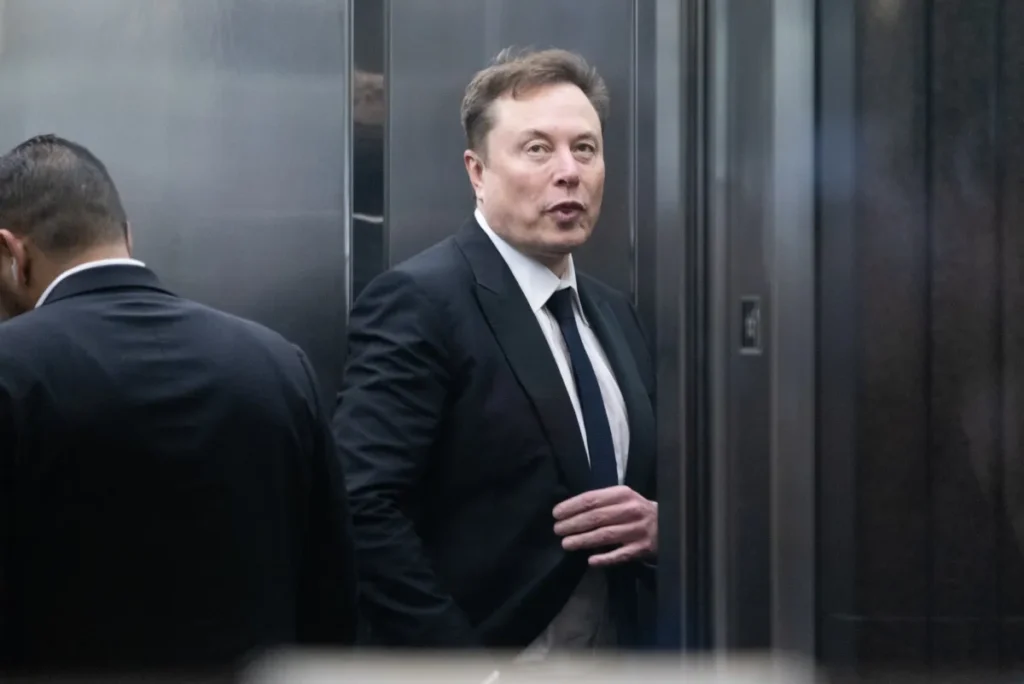

Elon Musk dropped a bombshell in court this week: xAI trained Grok on output from OpenAI’s models. The admission came during testimony in an ongoing legal battle between the two companies, and it’s a lot more interesting than the usual courtroom drama.
For those who haven’t been following the soap opera, Musk co-founded OpenAI, left, then started xAI as a direct competitor. The lawsuit alleges OpenAI abandoned its nonprofit mission. OpenAI counters that Musk is just bitter he’s not in charge. But this testimony cuts to a real technical and ethical question: how much can you borrow from a competitor’s model before it’s not your own work?
“Distillation” is the technical term here. It’s a process where you take a large, powerful model (like GPT-4) and use its outputs to train a smaller, cheaper model. The smaller model learns to mimic the big one’s behavior without needing the same massive compute or training data. It’s a well-known technique in machine learning — not illegal, but ethically murky when the source model is a competitor’s proprietary product.
Musk didn’t dance around it. He confirmed that xAI used OpenAI’s models to generate training data for Grok. The implication is that Grok’s performance, particularly in its early versions, was bootstrapped on OpenAI’s work. That’s a bold strategy, and honestly, it’s not surprising. Every AI lab is looking for an edge, and distillation is faster and cheaper than training from scratch.
But here’s the rub: OpenAI’s terms of service explicitly prohibit using their models to train competing models. So either xAI ignored those terms, or they found a loophole. Musk’s testimony suggests they just went ahead and did it, which is technically a breach of contract. OpenAI’s lawyers are probably salivating.
What makes this interesting beyond the legal spat is what it says about the state of AI development. Distillation is everywhere. Smaller labs and even open-source projects routinely distill from frontier models because it’s the only way to compete without billions in compute. Anthropic and Google have complained about it, but enforcement is nearly impossible. You can’t easily prove a model was distilled from yours unless the output is suspiciously similar.
And that’s the real issue. The frontier labs are playing a game of “I know you’re doing it, but I can’t prove it.” Musk’s admission breaks that silence. It’s a rare moment where a CEO actually says, “Yes, we used their stuff.” That’s going to make other labs nervous.
I’ve seen this pattern before in tech — not just AI. In the early days of search engines, companies scraped each other’s indexes. In social media, features were copied wholesale. Distillation is just the latest iteration of “borrow until you can build your own.” The difference is that AI models are more like intellectual property than software features. They’re trained on vast datasets and represent enormous investment.
Still, I can’t help but feel a little sympathy for xAI. Starting a frontier AI lab from scratch is absurdly expensive. If you can shortcut the training process by distilling from a model that’s already out there, why wouldn’t you? The answer, of course, is that it’s against the rules. But the rules are poorly defined and unevenly enforced.
OpenAI itself has been accused of training on copyrighted data without permission. So the pot is calling the kettle black. The whole industry is built on a foundation of borrowed data and borrowed ideas. Musk’s testimony just pulls back the curtain.
Where does this leave Grok? It’s a decent chatbot, but nothing revolutionary. Distillation can give you a good starting point, but it won’t give you breakthrough capabilities. Grok still lags behind GPT-4 and Claude in reasoning and creativity. So the shortcut only gets you so far.
What I really want to know is how much of Grok’s later versions still rely on OpenAI’s output. If xAI stopped after the initial training and built the rest themselves, that’s one thing. If they’re still distilling today, that’s a bigger problem. Musk didn’t clarify the timeline.
This case is going to set a precedent. If the court rules that distillation from a competitor’s model is illegal, it could slow down the entire field. Smaller labs will struggle to catch up. If the court rules it’s fair use, expect a gold rush of copycat models. Either way, the era of quiet distillation is over.
For now, I’m just glad someone finally said it out loud. The AI industry has been pretending this doesn’t happen. Musk’s testimony is a dose of reality. Whether you agree with his methods or not, at least he’s honest about them. That’s more than most CEOs would do.
Comments (0)
Login Log in to comment.
Be the first to comment!