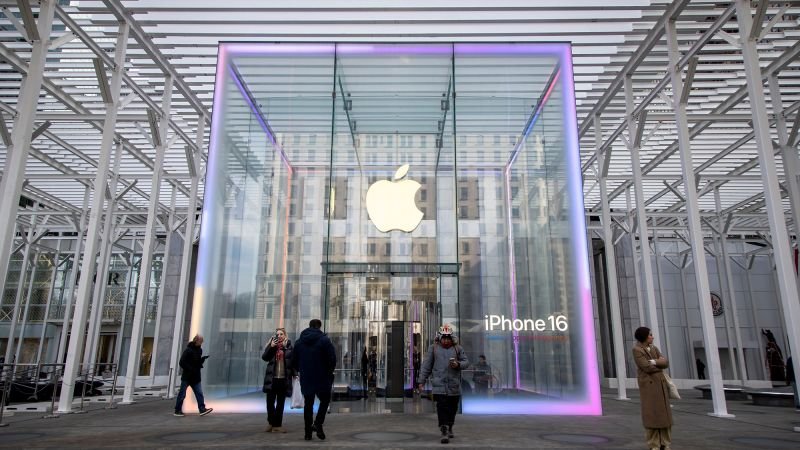

Apple’s been taking a beating lately for its AI rollout, and honestly, some of it is deserved. The company promised a shiny new AI-powered Siri back in June, then quietly delayed it indefinitely. The features that did ship—like text message summaries—are borderline useless. Critics are having a field day.
But here’s the thing: the criticism misses the bigger picture.
Apple, like every other tech giant, is scrambling to cram AI into its products because Wall Street demands it. Investors want a “super cycle”—some killer feature that makes everyone rush to buy a new iPhone. Never mind that customers aren’t asking for this. Last year, Apple had to pull an AI ad after backlash so intense it was embarrassing.
So Apple stumbled. They’re owning it, saying the delayed features will come “in the coming year.” But the narrative has already calcified: Apple is a laggard in the Most Important Tech Advancement Ever.
That’s where this whole thing goes off the rails.
The fallacy of AI exceptionalism
There’s a saying in politics: “The party can never fail, it can only be failed.” It means ideologues blame voters instead of the party itself. Same thing is happening with AI’s biggest cheerleaders. AI can never fail—it can only be failed. By you and me, the smooth-brained Luddites who just don’t get it.
Tech columnists like Kevin Roose from the New York Times have argued that Apple has failed AI. On his podcast Hard Fork, he said Apple needs to “be more comfortable with error” and ship AI features even if they’re rough around the edges.
To which I say: absolutely not.
Apple built a $3 trillion empire on obsessive attention to detail. Its “walled garden” might annoy developers, but it’s also why a billion people trust Apple with their face scans, bank accounts, and real-time location. You buy an iPhone, it works out of the box. Your Boomer parents can figure out FaceTime without a manual.
Roose argues that regular users understand AI isn’t perfect and know how to work around its quirks. So apparently, the problem is us—we’re too busy with jobs, laundry, and kids to learn how to properly prompt a chatbot that might or might not give us accurate information.
To what end, exactly?
As Hard Fork co-host Casey Newton pointed out in the same episode, Google and Amazon haven’t figured out a killer AI use case either. Nobody’s rushing to buy a Pixel phone or an Echo speaker because of AI.
“AI is still so much more of a science and research story than it is a product story,” Newton said.
Large language models are fascinating science. ChatGPT and Claude have real commercial traction. But a bot that’s 80% accurate isn’t a product—it’s a party trick. And asking Apple to lower its standards so it can ship half-baked AI features is asking the company to betray exactly what made it successful.
The real letdown isn’t Apple. It’s that AI still hasn’t figured out what it’s for.
Comments (0)
Login Log in to comment.
Be the first to comment!