
Apple’s Q2 earnings call had the usual highlights — iPhone keeps printing money, Services keeps growing — but the surprise of the quarter was the Mac. Not exactly the flashy part of Apple’s business these days, but it quietly punched above its weight.
Wall Street was expecting Mac revenue somewhere in the low $8 billion range. Apple delivered $8.4 billion for the quarter ending March 28. That’s a 6% year-over-year bump, when everyone thought it’d be flat. Total revenue hit $111.2 billion, up 17% from last year.
Apple tried to spin some of that growth toward the new MacBook Neo, those colorful machines that went up for preorder on March 4. But let’s be real — those things barely shipped before late March, and some models sold out so fast that demand probably spilled into April. Hard to credit a few weeks of sales for a whole quarter’s beat.
Tim Cook had a more interesting explanation on the earnings call. He said customer demand for the Neo was “off the charts” and that Apple set a record for new Mac customers this quarter, partly thanks to the Neo. But the real driver? AI workloads.
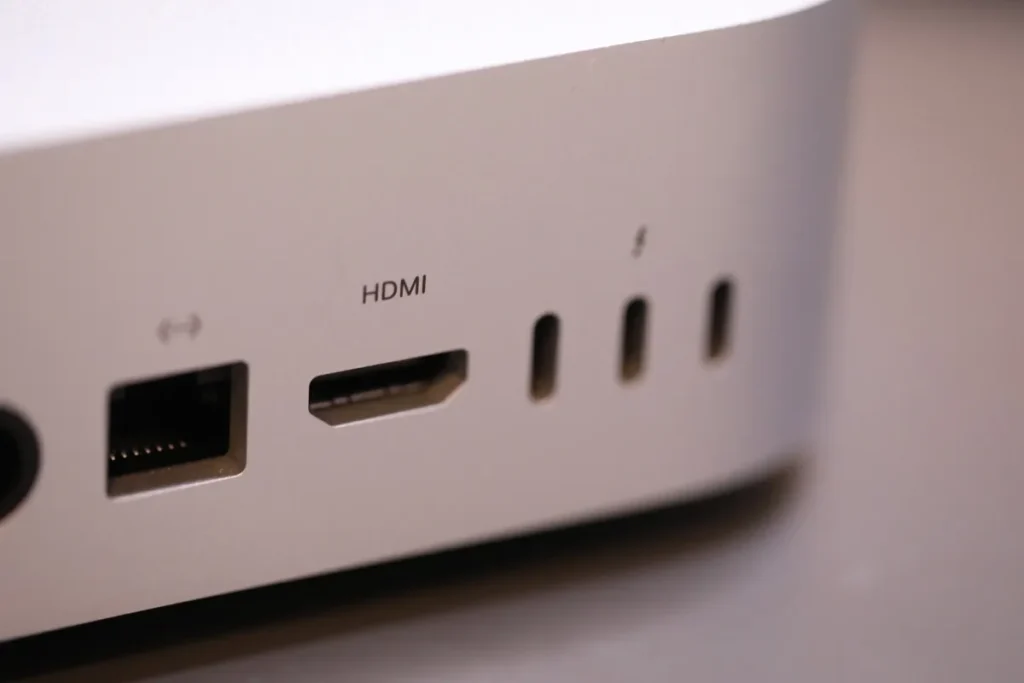
Cook admitted Apple was caught off guard by how many people are buying Mac mini and Mac Studio machines specifically to run local AI models — he mentioned OpenClaw by name. “Both of these are amazing platforms for AI and agentic tools, and the customer recognition of that is happening faster than what we had predicted,” he said. Translation: we didn’t see this coming.
The Mac mini is now the top-selling desktop in China, a market that’s been going absolutely nuts for OpenClaw lately. But before you get too excited, Mac revenue was flat quarter-over-quarter. This AI-driven demand hasn’t scaled yet. Cook said it could take “several months” to balance supply and demand on those models.
“We’re not at the point where we’re saying this [constraint] is going to end anytime soon. And it’s not because of a problem, per se, other than we just under-called the demand,” he explained. Honest, at least.
Enterprise demand is also a factor. Apple called out companies like Perplexity that’ve standardized on Mac for building enterprise-grade AI assistants. And Cook mentioned that schools like Kansas City Public Schools are ditching Chromebooks for the MacBook Neo, though Apple is still supply-constrained on that model.
I’ve been saying for a while that Apple’s silicon advantage in AI inference is underrated. The unified memory architecture on M-series chips makes running large models locally a genuinely good experience compared to most Windows machines. Looks like the market is finally catching on — faster than Apple itself did.
Comments (0)
Login Log in to comment.
Be the first to comment!