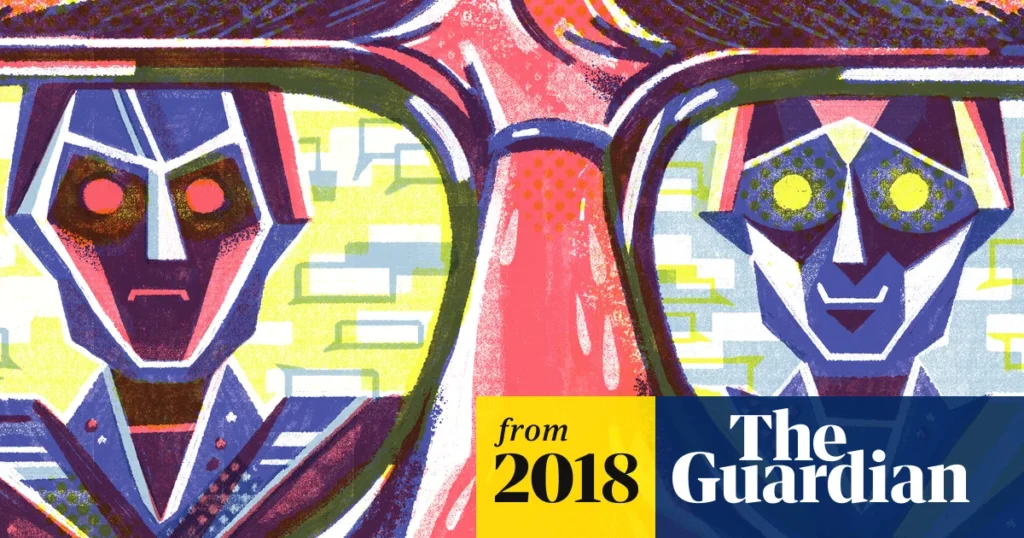

Back in 2018, Oscar Schwartz wrote a piece for the Guardian about how the media keeps getting AI wrong. He pointed to a now-infamous example: Facebook researchers published a paper showing that bots negotiating with each other sometimes generated weird sentences like “Balls have zero to me to me to me to me.” That was a minor artifact—the researchers had forgotten to constrain the bots to proper English grammar. Not a big deal.
But Fast Company ran with “AI Is Inventing Language Humans Can’t Understand. Should We Stop It?” and the internet lost its collective mind. Suddenly every outlet was running “Facebook engineers panic, pull plug on AI after bots develop their own language.” The Sun compared it to The Terminator. Actual researchers watched in disbelief as their boring technical finding turned into clickbait horror fiction.
Zachary Lipton, a CMU professor quoted in the piece, called it the “AI misinformation epidemic.” He wasn’t wrong. But here’s the thing—this pattern isn’t new. Schwartz traced it back to 1946, when journalists described the ENIAC as an “electronic brain” and a “mathematical Frankenstein.” A physicist named DR Hartree tried to correct the record in Nature, but the London Times still ran with “An Electronic Brain: Solving Abstruse Problems; Valves with a Memory.” Hartree wrote a letter saying the machine was “no substitute for human thought.” Nobody cared.
Then in 1958, Frank Rosenblatt showed off the perceptron—a simple pattern recognizer—and the New York Times claimed it would soon “be able to walk, talk, see, write, reproduce itself and be conscious of its own existence.” That’s not just wrong, it’s embarrassing in hindsight.
The hype cycle has been running for decades. Every new AI breakthrough gets inflated into a Terminator prequel or a utopian savior. The problem is that this isn’t harmless. When the public gets fed a steady diet of nonsense, expectations become unhinged. Either people think AI is about to take over the world, or they dismiss it as vaporware. Neither helps actual progress.
Fast forward to 2025, and the discourse is arguably worse. Social media has created an entire ecosystem of “AI influencers” who do nothing but paraphrase Elon Musk tweets and repackage sensational headlines for engagement. The incentives are all wrong. Accuracy doesn’t pay. Clicks do.
The Guardian piece from 2018 is still worth reading because it reminds us that this isn’t a new problem. It’s a structural one. The media loves a good AI disaster story, and researchers are tired of cleaning up the mess. Until the business model changes, expect more stories about bots inventing languages and algorithms becoming self-aware. Just don’t believe them.
Comments (0)
Login Log in to comment.
Be the first to comment!