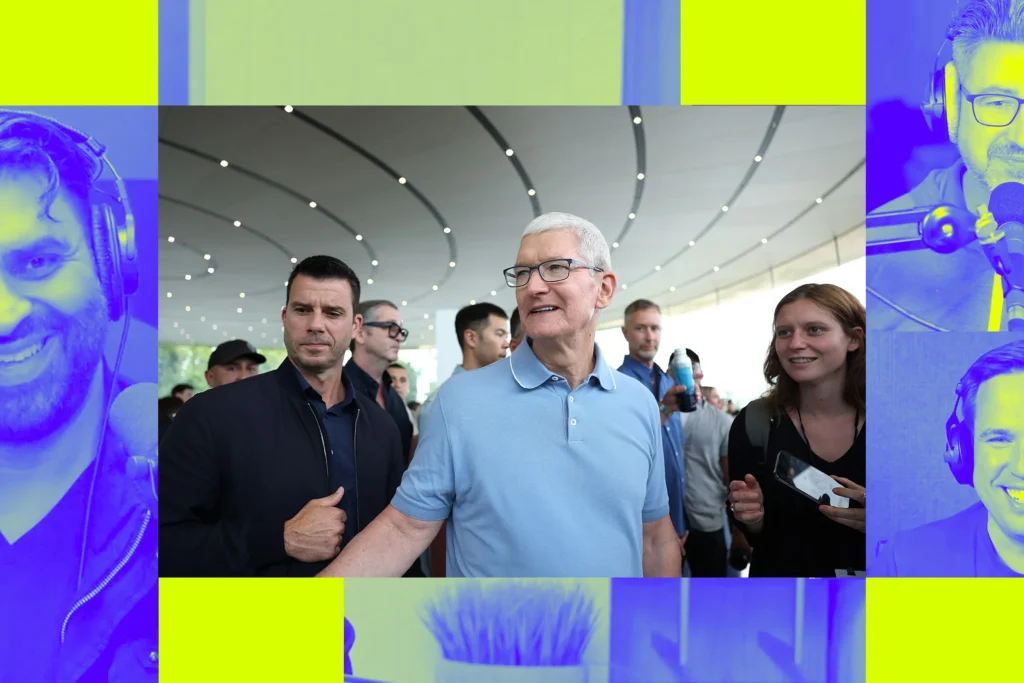

We all knew this day would come eventually. Tim Cook isn’t immortal, and Apple doesn’t let CEOs stay forever. Over the last year, the writing was on the wall that John Ternus—the guy who runs hardware engineering—was the heir apparent. But the news this week still caught me off guard. Not because it’s surprising in hindsight, but because Cook has been such a steady, almost boring presence that imagining Apple without him feels weird.
I’ve been thinking a lot about what Cook’s legacy actually is. The Vergecast crew sat down with John Gruber from Daring Fireball to hash it out, and honestly, it’s a mixed bag. Cook delivered insane financial success—Apple is the most valuable company on earth, full stop. But the product catalog under his watch? That’s more complicated.
AirPods are probably his biggest win. They’re not just popular; they redefined an entire category. Before AirPods, wireless earbuds were clunky and niche. After, they became the default. That’s a genuine product achievement. The Apple Watch also found its footing after a rocky start, pivoting from a fashion accessory to a genuine health device. Those two products alone would make most CEOs proud.
Then you have the Touch Bar. Oh, the Touch Bar. A strip of OLED that nobody asked for, that developers barely supported, and that Apple quietly killed after a few years. It’s the perfect symbol of Cook-era Apple: ambitious in theory, half-baked in execution, and eventually abandoned without much explanation. The MacBook butterfly keyboard disaster fits the same pattern—Apple pushed a thinness obsession that made keyboards unreliable, and it took years to walk it back.
The services push—Apple TV+, Arcade, Fitness+, iCloud+—is more money printer than visionary move. They’re fine, but none of them redefine anything. Apple Music is a solid Spotify clone. Apple TV+ has a few great shows but no cultural footprint like Netflix. The real money is in the App Store commission, which is under constant regulatory attack. Cook’s Apple was great at extracting value from existing ecosystems, less great at inventing new ones.
And then there’s the Vision Pro. That thing is a technical marvel that nobody wants to wear for more than 30 minutes. It’s the most “Apple” product of the Cook era: incredibly engineered, incredibly expensive, and incredibly niche. It might find a foothold in enterprise or as a developer kit, but as a consumer product, it’s a curiosity, not a hit.
What strikes me most is that Cook’s Apple didn’t take big swings. Under Steve Jobs, Apple upended music, phones, and tablets. Under Cook, they iterated on existing ideas—bigger phones, better cameras, faster chips, more services. The M-series chips are genuinely impressive, but they’re an evolution of the iPhone silicon strategy, not a new category. Cook was the safe pair of hands that Wall Street loved, but he never had a “one more thing” moment that actually changed the world.
Ternus inherits a company that’s financially unassailable but creatively cautious. The question is whether he’ll keep playing it safe or push Apple toward something genuinely new. I’m not holding my breath, but I’d love to be surprised.
For the full conversation, the Vergecast episode with Gruber is worth your time. It’s a good look back at a decade that reshaped tech in ways both profound and frustrating.
Comments (0)
Login Log in to comment.
Be the first to comment!