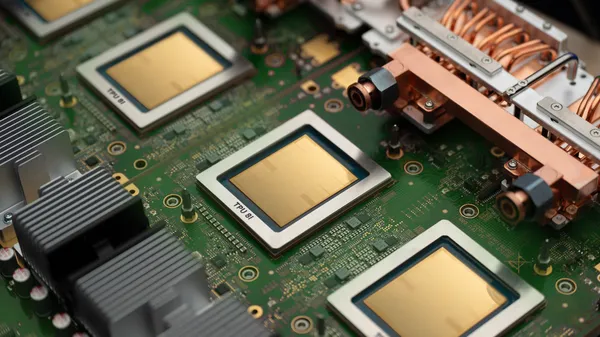

Google’s been cranking out TPUs for years, but the eighth generation feels different. They’re not just tweaking the same recipe for faster training or cheaper inference. This time around, they’re shipping two specialized chips, and the messaging is clear: the era of AI agents is here, and the old hardware won’t cut it.
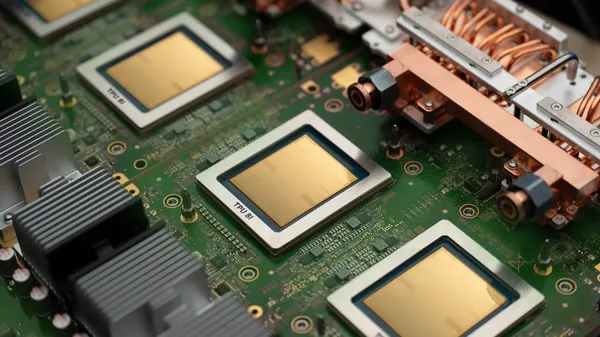
I’ve been watching TPU launches since the v2 days, and what strikes me most is how Google is finally admitting that one-size-fits-all accelerators are a compromise. The first chip, let’s call it the “thinker,” is optimized for the kind of multi-step reasoning that agents need—chain-of-thought, tool use, planning. The second is a throughput monster for serving those agents at scale. Two chips, two jobs, no more pretending a single architecture is good at both.
This is a smart bet. The agent workflows I’ve been tinkering with—things like autonomous web scraping, multi-turn task decomposition, even simple code generation loops—they all hit a wall on current hardware. The latency variance spikes, memory bandwidth gets choked, and you end up with a model that takes forever to decide which API to call. Google’s clearly seen the same pain points and decided to build around them.
What I don’t see is any mention of pricing or availability beyond the usual “coming to Cloud TPU customers.” That’s frustrating. These chips will be useless if they’re locked behind enterprise contracts that only FAANG-scale companies can afford. Smaller teams building agents need access too. I hope Google learned from the TPU v4 rollout, which was a nightmare for anyone not on a premier support plan.
The other thing worth noting: this is a direct shot at NVIDIA’s dominance in inference. The Grace Hopper and Blackwell architectures are general-purpose by design. Google is saying, “We know exactly what agents need, and we’re building for that.” If the benchmarks hold up, and if the software stack (JAX, XLA, etc.) is tuned properly, this could shift the conversation. But that’s a big if. NVIDIA’s CUDA ecosystem is sticky for a reason.
I’m cautiously optimistic. The agentic era is real—I’ve been running experiments with LangGraph and AutoGen, and the hardware bottleneck is the single biggest pain point. If Google delivers on these specialized TPUs, it could make agent development feel less like hacking around limitations and more like actually building products. Let’s see if they can execute.
Comments (0)
Login Log in to comment.
Be the first to comment!